
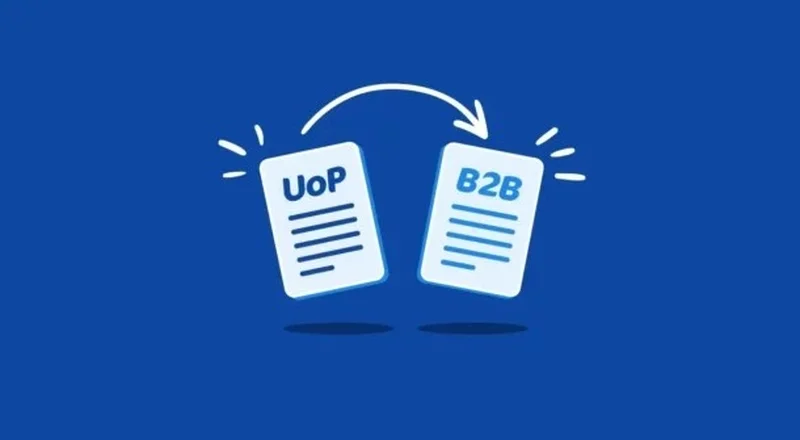
Hiring B2B Contractors vs. UoP Employees in Poland
The Financial Benefits of the 12% Flat-Rate PIT for B2B
The 12% flat-rate Personal Income Tax (ryczałt) enables Polish B2B contractors in IT to pay a reduced, fixed tax on gross revenue without deducting business expenses. This structure aggressively maximizes net take-home pay.
Understanding the Ryczałt Framework in 2026
You can drastically optimize personal income tax liabilities through the ryczałt system. Poland categorizes independent contractors based on their specific business activities and assigns different flat tax rates accordingly. Software engineering and IT consulting generally fall under the 12% bracket. Standard employees on UoP face a two-tier progressive system, paying 12% up to PLN 120,000 and suffering a steep 32% rate on all earnings above that threshold.
High-earning professionals hit the 32% threshold very quickly in the tech sector. B2B contractors bypass this penalty entirely by maintaining a flat 12% liability regardless of total revenue. You must recognize that ryczałt prohibits the deduction of standard business expenses. Purchasing a laptop, leasing a car, or renting office space will not lower your taxable base.
The sheer drop from a 32% marginal rate to a fixed 12% easily outweighs the loss of these deductions. Tech workers realize immediate cash-flow improvements when they abandon the progressive scale. The government actively encourages this shift to keep highly skilled technical talent within Polish borders.
Breaking Down the 12% Bracket Eligibility
Tax authorities demand strict adherence to the Polish Classification of Goods and Services (PKWiU). You must map your contract deliverables to the correct classification codes to secure the rate. Software development typically falls under PKWiU 62.01.1, triggering the exact 12% requirement. Technical support or manual testing often qualifies for an even lower 8.5% bracket.
Data from recent corporate setups shows that rigorous upfront PKWiU mapping prevents major compliance disasters. Companies hiring contractors should request proof of a binding individual tax ruling (interpretacja indywidualna). This ruling provides absolute legal certainty regarding the applied flat rate. The National Revenue Information (KIS) issues these binding interpretations within three to six months of application.
Choosing the wrong code can trigger massive back-tax assessments during a random treasury audit. You bear full financial responsibility for selecting the right PKWiU code. Relying on generic advice rather than securing a formal interpretation invites unnecessary risk into your operational model.
Scaling Revenue and the VAT Exemption Threshold
Freelancers often start without registering for Value Added Tax (VAT). Polish law provides a VAT exemption for businesses generating under PLN 200,000 in annual revenue. You save significant administrative hassle by avoiding VAT registers during the early stages of a B2B operation. Engaging with international clients almost immediately forces VAT registration to handle reverse-charge mechanics.
Once a contractor exceeds the threshold, they must add 23% VAT to domestic invoices. This rarely impacts the engaging company, as standard corporate entities simply deduct the VAT in their own filings. B2B professionals actually prefer VAT registration because it allows them to reclaim the VAT spent on business-related purchases. Even under the ryczałt system, you can still deduct VAT on your operational costs.
Impact on Take-Home Pay vs. Progressive Tax
Consider an IT architect invoicing PLN 25,000 net monthly. An employee on UoP with the same gross salary loses a massive portion of their income to the 32% bracket and proportional health contributions. The B2B contractor pays only 12% on the gross invoice amount. They also pay a tiered, lump-sum health contribution rather than an uncapped percentage.
This financial gap grows wider as compensation scales upward. Senior engineers frequently demand B2B contracts specifically to access the ryczałt framework. You will struggle to attract elite Polish tech talent if you only offer standard UoP arrangements. Structuring the relationship commercially ensures the talent retains more cash while protecting the company's bottom line.
Comparing Employer ZUS Burdens with B2B Autonomy
Standard Employment Contracts (UoP) force companies to pay roughly 20% on top of gross salaries for ZUS contributions. B2B contractors assume their own ZUS liabilities, freeing the engaging company from statutory payroll taxes.
The Hidden Costs of the UoP Model
Hiring an employee under standard Polish labor law triggers aggressive hidden overhead. The company must fund mandatory pension, disability, accident, and labor fund contributions out of its own pocket. These employer-side burdens add approximately 20.48% to the agreed gross salary. You cannot legally transfer or waive these statutory obligations under any circumstance.
Scaling a team exclusively on UoP places immense strain on corporate cash flow. A developer negotiating a PLN 20,000 gross monthly salary actually costs the company over PLN 24,000. These compounding costs cripple the hiring budgets of foreign startups entering the Polish market. Employment contracts also mandate 20 to 26 days of paid vacation and fully funded sick leave.
UoP salaries also hit an annual cap on pension and disability contributions. In 2026, once an employee earns PLN 282,600, both the employer and employee stop paying into those specific funds. However, the health insurance contribution remains completely uncapped, heavily penalizing high earners.
B2B ZUS Mechanics: Big ZUS and Preferential Rates
Contractors operating as independent businesses handle their own social security affairs. They pay a fixed monthly ZUS rate that remains static regardless of how much revenue they generate. In 2026, the standard "big ZUS" contribution base sits at 60% of the projected average wage. This translates to roughly PLN 1,926 per month in pure social contributions.
New contractors benefit from aggressive statutory discounts during their first years of operation. The "Relief to Start" program eliminates social contributions entirely for the first six months. Following that, contractors can leverage a preferential ZUS rate calculated on 30% of the minimum wage for two years. You effectively strip away the heaviest payroll burdens by engaging talent through these commercial setups.
Cost Breakdown: B2B Contractor vs. UoP Employee
Comparing these models mathematically reveals the stark reality of the Polish labor market. We mapped the core financial obligations spanning taxes, social security, and hidden overhead. The table below outlines the strict division of liabilities for the 2026 fiscal year.
| Cost Component (2026) | Employment Contract (UoP) | B2B Contractor (12% Flat Rate) |
|---|---|---|
| Employer / Company Payroll Tax | Approx. 20.48% above gross salary | 0% (Company pays net invoice amount) |
| Income Tax (PIT) | 12% up to PLN 120k; 32% above | Flat 12% on total revenue (no deductions) |
| Social Security (ZUS) | Proportional to salary (uncapped health) | Fixed monthly rate (approx. PLN 1,926 + tiered health) |
| Paid Time Off & Sick Leave | 20-26 paid days + mandatory sick leave | None required by law (purely commercial terms) |
| Notice Periods & Termination | Rigid statutory periods (up to 3 months) | Flexible terms defined by the contract |
KSeF Compliance and Administrative Duties
Operating as a B2B contractor in 2026 demands strict adherence to the National e-Invoicing System (KSeF). The government mandates that all domestic B2B transactions pass through this centralized digital platform. Contractors can no longer generate simple PDFs and email them to clients. They must issue structured XML invoices directly into the government database.
This digital enforcement removes any room for creative accounting or backdated invoices. The engaging company downloads the official invoice straight from the KSeF portal to process payment. You completely eliminate the risk of lost invoices or fraudulent billing. The contractor must bear the cost of KSeF-compliant accounting software and professional tax advisory services to remain compliant.
Long-term Financial Autonomy for the Contractor
B2B frameworks force the individual to act as a micro-enterprise. They control their cash flow, manage their invoicing, and assume the risk of their own economic viability. You do not process their taxes or handle their social security filings. This autonomy dramatically reduces the administrative burden on your HR and payroll departments.
Mitigating the Risk of Reclassification by Labor Inspectors
Polish labor inspectors can retroactively reclassify a B2B contract into an Employment Contract (UoP) if the relationship mimics standard employment. Reclassification triggers devastating back-taxes, unpaid ZUS contributions, and strict labor law penalties.
The Mandate of the National Labor Inspectorate (PIP)
Disguised employment ranks as a top target for the National Labor Inspectorate (PIP). Auditors actively hunt for B2B contracts that function exactly like regular jobs. The state loses massive tax revenues when employees masquerade as independent contractors. PIP wields the authority to drag engaging companies into labor court to force a legal reclassification.
A successful reclassification results in catastrophic financial damage. The company becomes instantly liable for years of unpaid employer-side ZUS contributions and accrued penalty interest. You will also owe the contractor compensation for unpaid overtime, missed vacation days, and other statutory benefits. Defending against these actions requires expensive legal counsel and drains corporate resources.
Key Triggers for Disguised Employment
Inspectors look for specific markers of subordination to prove an employment relationship exists. Forcing a contractor to work strict office hours under direct managerial supervision guarantees an audit failure. You cannot treat a B2B partner like a subordinate employee. They must retain absolute control over how, when, and where they execute their deliverables.
In our practice tracking CEE markets, companies repeatedly make the mistake of granting B2B workers corporate job titles. Giving a contractor a title like "VP of Engineering" implies deep integration into the corporate hierarchy. Inspectors also flag the mandatory use of company-owned laptops and strictly enforced vacation approval systems. Genuine independent contractors determine their own schedules and provide their own tools.
Drafting Audit-Proof B2B Contracts
Your commercial agreement serves as the first line of defense during a PIP inspection. Eradicate all terminology tied to the Polish Labor Code. Do not use words like "employee", "employer", "salary", or "paid leave". Replace them with "service provider", "client", "remuneration", and "service suspension".
You must structure the agreement around concrete deliverables and service level agreements (SLAs). The contract should emphasize the results of the work rather than the time spent sitting at a desk. Ensure the B2B partner legally retains the right to service other clients. Exclusivity clauses scream disguised employment and practically guarantee an unfavorable ruling.
Handling Equipment and Software Licenses
Providing hardware creates a dangerous gray area during PIP audits. Supplying a top-tier MacBook Pro to a contractor suggests a level of integration typical of standard employment. Genuine businesses generally purchase their own capital assets. You should strongly encourage B2B partners to use their own equipment to solidify their independent status.
If security protocols demand the use of company-owned devices, you must structure the arrangement carefully. Draft a separate hardware lease agreement and charge the contractor a nominal monthly fee for the equipment. This creates a clear commercial paper trail. The same logic applies to enterprise software licenses, where the contractor should ideally cover these costs independently.
Navigating Paid Time Off in Commercial Terms
Tech talent naturally demands time to rest and recharge. You cannot legally offer "paid vacation" to a B2B contractor without waving a massive red flag at labor inspectors. Companies structure these breaks as "unpaid service suspension periods" paired with an adjusted monthly retainer. The contract simply guarantees that the company will pay the full retainer even if the contractor pauses services for 20 days a year.
This semantic shift completely alters the legal reality of the arrangement. The contractor exercises their commercial right to halt service delivery without breaching the SLA. You maintain the financial attractiveness of the offer without violating the Polish Labor Code. Always ensure these clauses focus on commercial availability rather than employee well-being.
Intellectual Property Transfer Agreements on B2B
B2B contracts require explicit, written clauses to transfer Intellectual Property (IP) rights from the contractor to the engaging company. Without these provisions, the contractor legally retains ownership of the code they write.
Statutory IP Rules for UoP vs. B2B
Polish copyright law heavily favors the creator of the work. Employment contracts (UoP) benefit from statutory protection where economic IP rights automatically transfer to the employer upon creation. B2B agreements operate outside this legal safety net. You must aggressively protect your digital assets by drafting customized IP transfer mechanisms.
Failing to secure these rights leaves your core product vulnerable. A disgruntled contractor could legally demand royalties or block the sale of your software. You cannot rely on an implied transfer of rights. Polish law demands explicit, written documentation to prove that the economic rights have changed hands.
Defining Fields of Exploitation Properly
The concept of "fields of exploitation" (pola eksploatacji) forms the backbone of Polish copyright transfers. You must explicitly list every single way the company intends to use the intellectual property. Standard clauses transferring "all rights in the universe" hold zero legal weight in Poland. The contract must detail rights regarding modification, public display, distribution, and digital reproduction.
We consistently see that companies fail to update these fields as technology evolves. If your contract lacks a clause concerning AI training or cloud deployment, the contractor retains those specific rights. Draft these lists exhaustively. Engage a local legal expert to ensure the fields map correctly to current judicial interpretations.
Tying IP Transfer to Remuneration
The safest mechanism for transferring IP ties the legal shift to the payment of the invoice. The contract should state that rights transfer exactly at the moment the funds clear the contractor's bank account. This protects the company from paying for unowned code. It also protects the contractor from having their work stolen without compensation.
Always separate the remuneration for the IP transfer from the remuneration for the physical labor. Defining a specific monetary value for the IP limits future disputes. You clearly establish that the creator received fair market value for surrendering their economic rights.
The Threat of Co-Authorship and Open Source Contamination
Collaborative coding environments introduce the risk of co-authorship disputes. When a B2B contractor builds a feature alongside internal UoP employees, the resulting IP becomes entangled. You must ensure your transfer clauses specifically address joint authorship. The contract should grant the company the exclusive right to manage and exploit the combined intellectual property.
Contractors must also warrant that their deliverables remain free of restrictive open-source licenses. Injecting GPL-licensed code into a proprietary codebase can legally force the company to open-source its entire product. Your B2B agreement must include strict indemnification clauses. The contractor must assume full financial liability if their code violates third-party intellectual property rights.
Managing Moral Rights and Source Code Modifications
Polish copyright law splits intellectual property into economic rights and moral rights. Economic rights can be bought, sold, and transferred freely. Moral rights, such as the right to be recognized as the author, remain permanently attached to the creator. You cannot legally force a contractor to transfer their moral rights.
However, you can legally require the contractor to commit to not exercising those moral rights. Your contract must include a clause where the creator promises never to interfere with future modifications of the work. They must allow anonymous publication of the code. Without this waiver, a former contractor could paralyze your development pipeline by objecting to architectural changes.
Frequently Asked Questions (FAQ)
Find quick, definitive answers to the most critical legal and financial questions regarding B2B and UoP hiring frameworks in Poland.
1. Can a B2B contractor work exclusively for one company in Poland?
Yes, but extreme exclusivity drastically increases the risk of labor reclassification. You should allow the contractor to take other clients to prove their operational independence. Exclusive B2B relationships often trigger audits by the National Labor Inspectorate (PIP), resulting in severe financial penalties if disguised employment is proven.
2. Who pays the health insurance contribution under a B2B model?
The B2B contractor assumes full responsibility for their own health insurance. Under the 2026 ryczałt framework, this contribution relies on strict revenue tiers and cannot be fully deducted from income tax. The engaging company bears zero liability for the contractor's medical coverage.
3. Are B2B contractors entitled to minimum wage and paid vacation?
No. B2B contractors operate as independent commercial entities outside the protections of the Polish Labor Code. They do not receive statutory paid vacation, sick leave, or minimum wage guarantees. Any time off must be negotiated as unpaid service breaks within the commercial agreement.
4. Does an employer pay VAT when hiring a B2B contractor?
The engaging company pays the net invoice amount plus the standard 23% VAT. However, the business can seamlessly deduct this VAT in their monthly tax filings. This mechanism makes the actual operational cost of the engagement exactly equal to the net invoice value.